
Intertrigo or MASD (moisture-associated skin damage) is common among CPL and CPPD horses.
Intertrigo
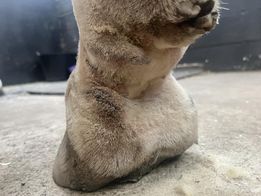
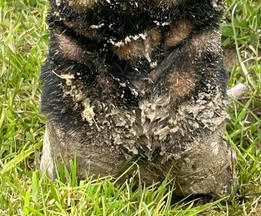
When we talk about secondary infections that affect CPL horses, intertrigo must be the prime candidate. It is a type of Moisture-Associated Skin Damage (MASD) that occurs commonly within the skin folds, when there is damp and friction. Most often seen under the fetlock where the folds tend to be more advanced, it can be sore, lead to infection and attracts flies which can lay eggs that turn into maggots.
CPL group member and paramedic/wound care professional Vicky Creighton recommends a combination of athletes foot powder/spray and antifungal cream such as 2% clotrimazole (Canesten is a common brand), to dry up the area. Your horse may need antibiotics or antifungals. Dermatophilus congolensis and Malassezia pachydermatis are commonly found on intertrigo swabs (Kaiser-Thom et al 2021). You should clip the hair off as much as possible to help the air get to the skin. Red Horse Products HoneyHeel is very popular and effective for dealing with mild intertrigo in CPL horses. It is best not to use manuka honey unless advised by your vet as it can be too strong and can dry the skin out too much, but if you’re going to use it please monitor the skin carefully and only use for a few days.
Diet is important. Adjusting it to reduce inflammation can be pivotal in chronic cases of intertrigo in CPL horses – as you’ll see from a post further down this page.
Shampoos like Malaseb® (POM) or Sebolytic® can be very helpful in restoring the skin’s natural balance and eliminating grease and exudate.
Long term, as long as the folds are deep, intertrigo may reoccur so adopting a routine for your horse with more exercise, consistent movement such as on a track system or 24/7 turnout will also be helpful in reducing the lymphoedema and growth of the fibrotic skin folds.
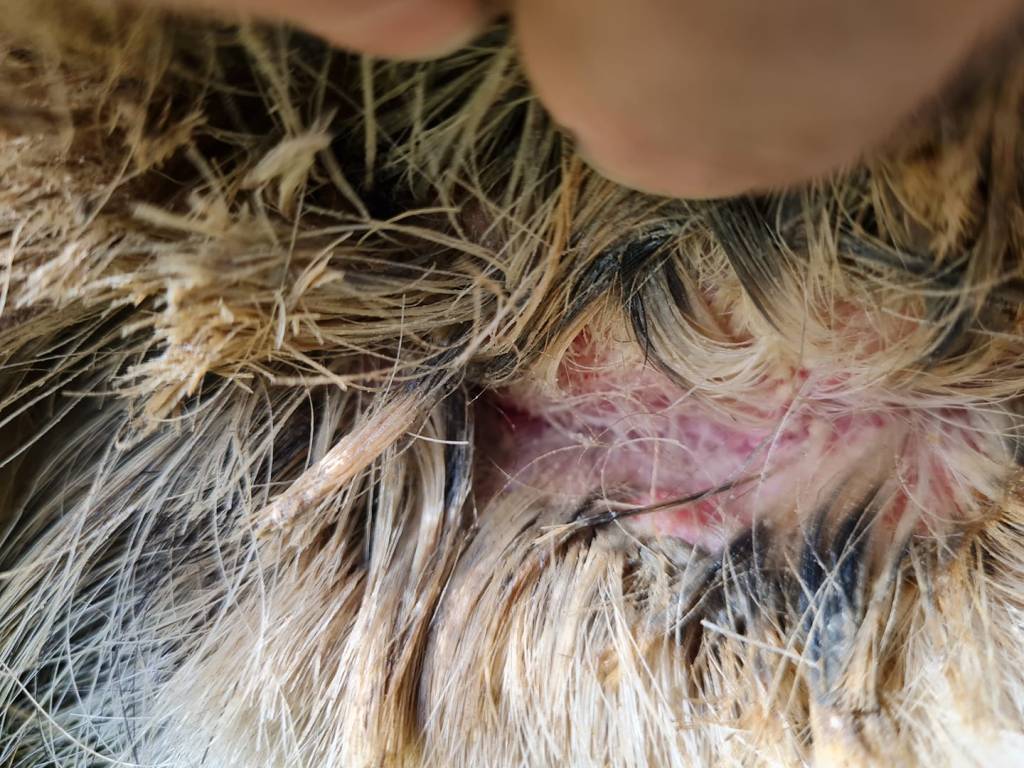
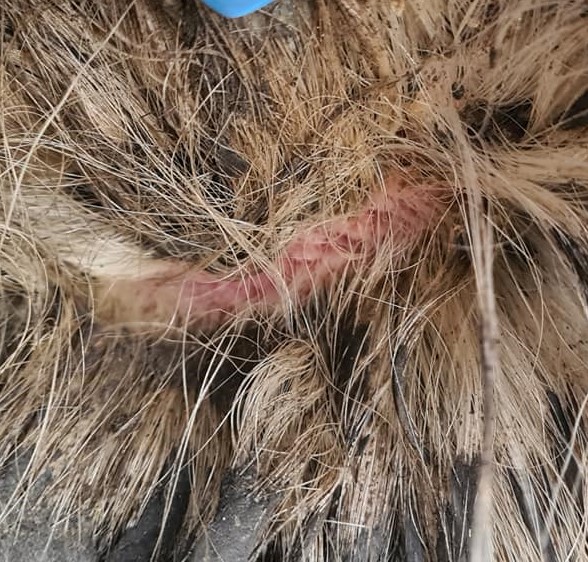
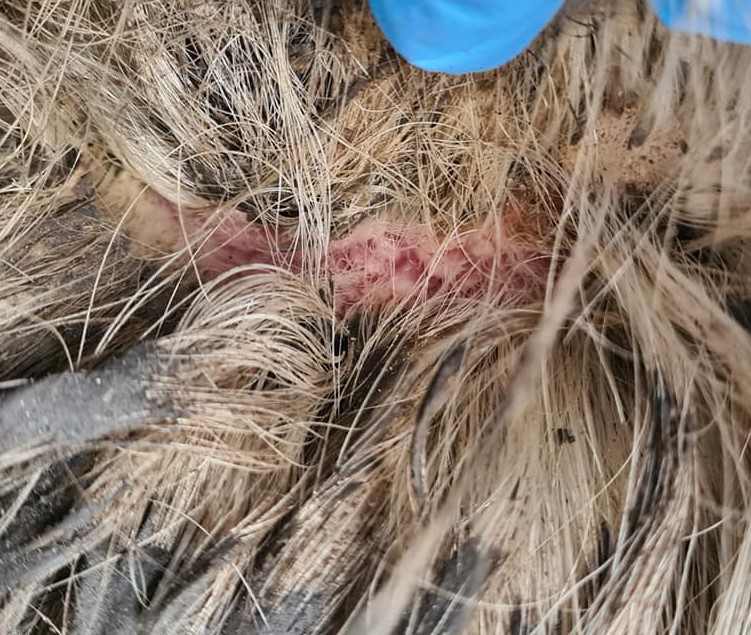
Philip Langley’s horse improved in just a couple of days after clipping and applying Daktarin spray and Canesten. See below.
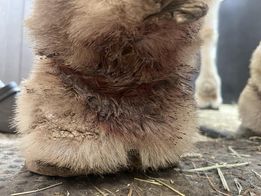
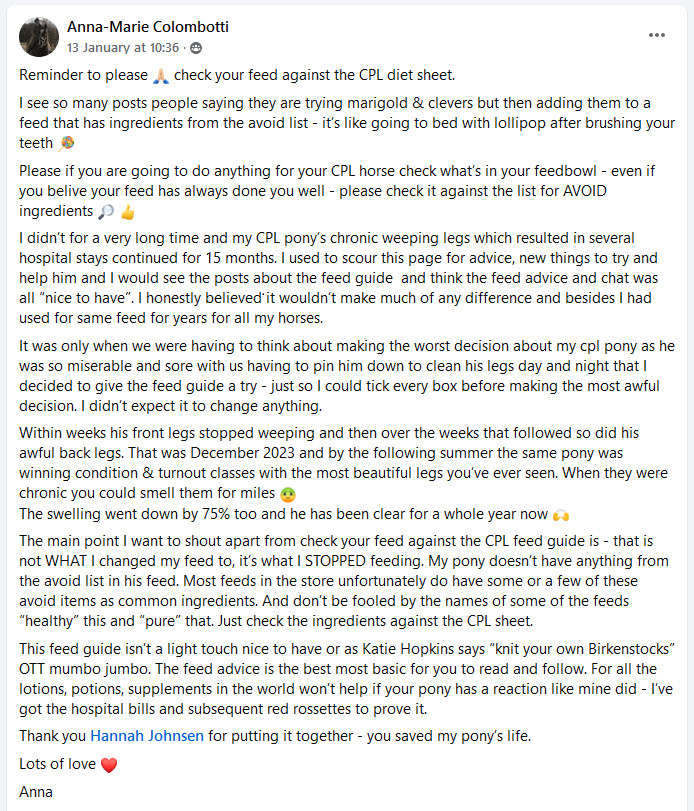
In the post below, CPL Facebook Group Expert Anna-Marie Colombotti pleads with other group members to always check their horse’s diet when they are experiencing really hard-to-treat intertrigo infections. Her horse was so badly affected he was lame and could not compete. Anna-Marie also recommends using calamine lotion to dry the area up when the infection is exudative, but only for 1-2 days. Battles® Summer Fly Cream mixed with emollient can be helpful for preventing the infection returning.
 Chronic Progressive Lymphoedema