
CPL-friendly nutrition
CPL treatment is quite limited in the options we have to manage the disease so alongside lymphoedema care it’s important that we take as holistic approach as possible. A major component of that is diet and we know from research that horses fed sugary, starchy grain and concentrates have worse CPL scores (severity) than those fed forage-based diets (SIEVERS et DISTL, 2023). The lymphatic system is considered part of both the circulatory and immune systems, so in the first instance it makes sense to ensure the horse has a healthy gut and immune system, which can be supported with appropriate supplements where necessary. We need to reduce inflammation in the gut which can negatively impact on the legs.
We find that horses with CPL do best on a simple, forage-based diet. Species-appropriate, if you will. This is not just hear-say, it is well recorded and as of 2023 Dr Marieke Brys (the primary expert on CPL globally) has confirmed my own thoughts through her experience with her own mare – that the diet has a huge impact. We recommend a diet free from chemically processed, potentially inflammatory ingredients and those which can damage the delicate gut microbiome and overload the lymphatic system. With a simple and balanced forage-based diet, we can hope to protect from dietary triggers that may cause flare ups and improve the overall health of the CPL horse. Daily feed and forage should ideally be <10-15% combined sugar and starch (newly revised and relaxed from the previous strict 10% cited on The Laminitis Site unless the horse is in active inflammation in which case <10% is sensible) due to the possibility of laminitis and the fact that a lot of these horses also have EMS. They are “thrifty” breeds by nature.
It is important to keep the horse from becoming overweight as this puts further strain on the already overburdened system and because CPL horses can be prone to laminitis and other hoof problems.
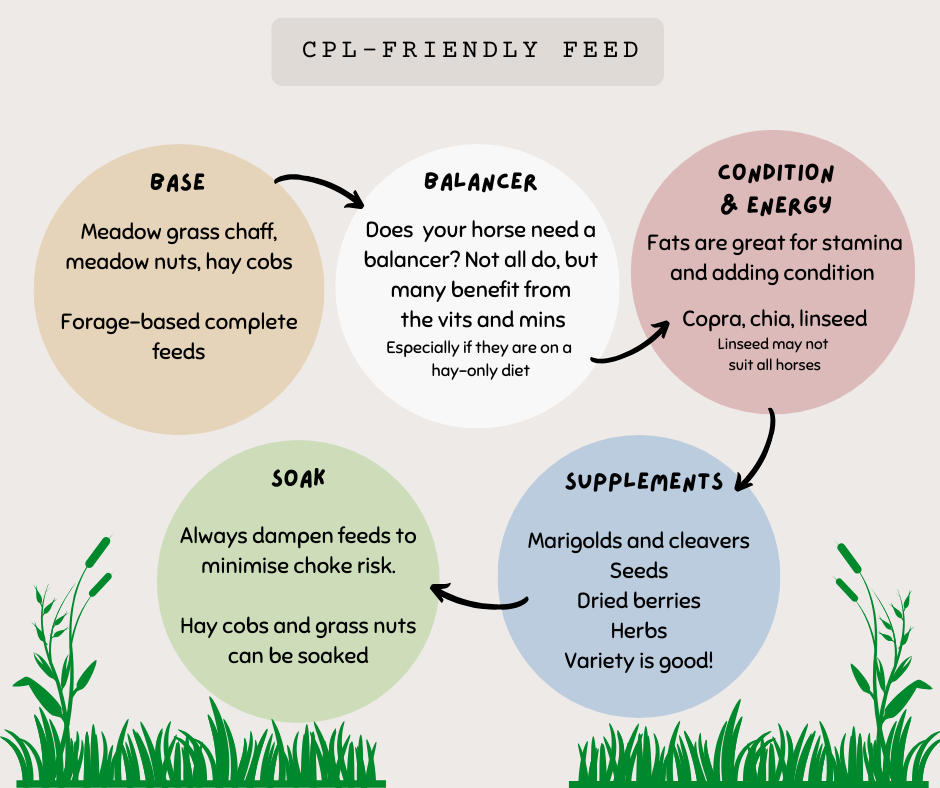
So what can these horses eat?
In basic terms, we would aim to avoid the well-known “nasties” in horse feed. The list is extensive and includes but is not limited to the following: –
❌ Soya, GM soya, soya hulls, soya oil – read Nia Angharad Cooke’s article here
❌ Oatfeed, wheatfeed, wheat middlings, grain screenings (many variations of these)
❌ Alfalfa (lucerne) – alfalfa looks good on paper but in practice is rarely helpful for CPL horses
❌ Molasses – its a no-brainer for horses already living with chronic inflammation and who tend to be very good doers
❌ Nutritionally-improved straw (chemically treated)
❌ Clay pelleting/binding agents
❌ Rye grass – albeit hard to avoid in many countries
❌ Clover
Better ingredients: –
✅ Mixed species meadow grass, meadow hay, timothy hay, alpine grasses
✅ Organic oat straw – great for very good doers
✅ Herbs, spices, beneficial plants, dried berries – see here for more info
✅ Seeds such as linseed*, sunflower, hemp and chia
✅ Copra which is coconut-based and good for adding condition
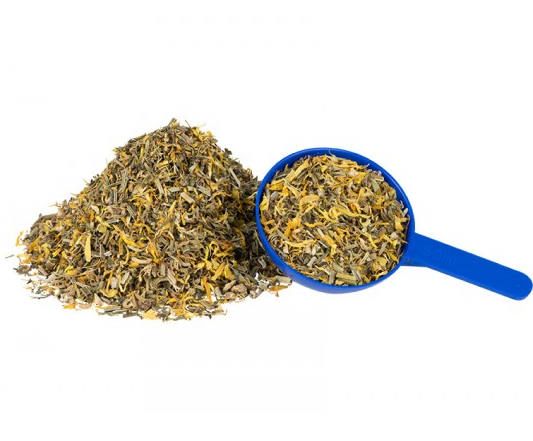
✅ Marigolds and cleavers supplement
✅ Horse-safe vegetables such as swede, carrots, parsnip, celery
✅Vitamins and minerals including vitamin B7 (biotin) – for info on why we advocate feeding B7 to your CPL horse, click this link
* Linseed ❓ Is currently under discussion due to some evidence that it causes hind gut inflammation/ulcers in some horses. I will update this as and when I have more information on it. If your horse has reacted badly to linseed then please avoid it.
Balancers
HoofGeek describes a healthy diet as also being barefoot-friendly which is useful for CPL horses due to their potential for hoof problems. Balance is key. But do all horses need a balancer? Nia Angharad Cooke from Finer Forage shares her thoughts in the video below.
How to balance the diet? Without getting right into the hay and grass analysis side of things (which are important if you suspect a deficiency or overload or sometimes if your horse has metabolic health problems), the easiest way is to find a good broad spectrum balancer. These should provide the recommended daily allowances of most vitamins, minerals and trace elements for your horse by weight. There are also more targeted balancers available.
Marigolds & Cleavers
We know that in human lymphoedema, clinical diuretics are contraindicated but what about herbs that are thought to be beneficial for lymphatic support? After initially trialling Hilton Herbs’ Marigolds and Cleavers supplement on one fairly advanced CPL horse back in 2015, there was an improvement in the condition of the skin, decreased itching and to some degree, speed of leg fill when stabled. As people began to take notice and trial the herbs on their own horses, more and more responses flooded in as owners began to see the same improvements in their own horses. Most active members on the CPL Facebook group cite Marigold and Cleavers or “M&C” as one of the major factors that have helped their horse (along with exercise, compression and diet). Since then, the herbs have also been picked up by the Mallenders and Sallenders community who are finding improvements too. Of course at this stage the reviews are all anecdotal but with any luck future research will look further into dietary recommendations and perhaps the manufacturers will undertake trials of their own.
Knowing what we do about clinical diuretics and their propensity to remove mostly the water part of the lymphoedema and leave behind waste, plus a concern over diuretics causing sugar concentration (important for CPL horses prone to laminitis), we contacted Hilton Herbs‘ own nutritionist for more information:
“As a Medical Herbalist with over 30 years’ experience of formulating herbal supplements for horses I would like to address this subject. Over the last 30 years I have used Cleavers (Galium aparine) in many formulations, including those specifically formulated to help support horses with Insulin Resistance or Laminitis.
It has been suggested that Cleavers have a diuretic action on the body so should not be used for horses with insulin resistance or laminitis as this may lead to increased concentrations of sugar in the blood and dehydration.
This is not accurate. Cleavers offer a mild diuretic effect on the body, anyone whose horse has been eating Cleavers may have seen an increase in urine output, but this is more due to the herbs “alterative” action rather than diuresis. Of course, it goes without saying that all animals should have access at all times to a good clean water supply regardless of any health concerns.
“Alterative” herbs are used primarily to detoxify the system and help support the elimination from the body of “waste products”, this is why herbs such as Clivers, Dandelion, Nettle are often used for conditions such as Arthritis, Chronic skin conditions and other inflammatory concerns, where they work by helping encourage the removal of inflammatory waste products from the tissues so they can then be processed and expelled by the body’s eliminative systems. Cleavers in particular are used for joint disease, connective tissue disorders, skin conditions or as part of Spring Detox programmes.
Cleavers and Marigold are often combined and are what is known as “Sister Herbs”, in that they are considered to help support the action of each other when combined.
Of course, as with any food or supplement you are planning to use for your horse it is important to follow the recommended feeding guide. It may be tempting to assume that if 2 scoops are good then 8 scoops are 4 times as good! Wrong! we don’t do this with our own food or supplements so why do it with your horse’s food?
Cleavers and Marigold are both extremely safe herbs with centuries of use by both people and animals, that when given access to the herbs will happily “ self-dose”.
Used correctly they can offer great support to horses and ponies of all ages. “
Hilary Self BSc. (Hons) MNIMH
It may also be helpful to support CPL horses immune systems to help with the reduced healing, inflammation and hypersensitivities they can encounter as a result of the disease.
Please consult your vet before starting a new feed or supplement and make sure to monitor your horse very carefully for any physical or behavioural changes. If in doubt, contact the manufacturer for more information.
CPL Facebook group favourites
Our members like and frequently recommend the following brands:-
Finer Forage
Simple Systems
Agrobs (UK) , Agrobs (DE)
Trinity Consultants
Hilton Herbs (UK) , Hilton Herbs (US)
 Chronic Progressive Lymphoedema