
CPPD – also known as Verrucous Pastern Dermatitis
Chronic Proliferative Pastern Dermatitis (CPPD)
Also known as verrucous pastern dermatitis, CPPD is often confused with CPL. CPPD can occur alongside CPL but is not the same disease.
Presenting as either tiny proliferative grape-like or larger nodules that appear wart-like, they cover the pastern area and have been linked to feather mites – or perhaps more likely, the horse repeatedly damaging the skin because of irritation from mites. CPPD nodules (unlike the flat CPL nodules) are highly vascular and seem to cause intense discomfort and itching. The horse scratches and the nodules bleed profusely and become infected, a cycle which repeats for the duration of the disease. Fly strike/maggots are common.
Suspected risk factors include feather mites, diet, heavy feathering and legs allowed to macerate under feather or in chronically damp conditions, intertrigo in CPL horses, and bacterial infections.
There is no known cure, however there are some experimental treatment options: –
Anusol/haemorrhoid cream After being approached by an owner desperate for a solution, fearing her beloved horse would need to be euthanised, I searched for a topical product that might fit the bill to ease the itching and discomfort so they could break the cycle of bleeding and infection. Knowing the nodules to be highly vascular, a tentative recommendation of Anusol (non-steroid) was offered, with the usual disclaimers and strict instructions to discontinue use if the horse reacted negatively in any way.Incredibly, not only did the owner find her horse to be more comfortable and itching ceased, but they were able to get the repeated infections under control and after several months, the nodules began to dry up and drop off.The horse now appears to be in remission from the disease, carefully managed by the owner – alternating the Anusol with emollient to keep the skin in good condition until it was no longer needed. See images below.
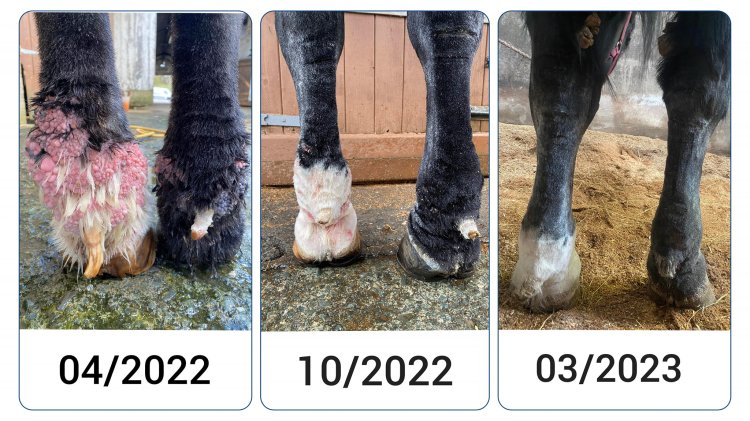
It’s important to note that I opted for the non-steroidal version of the cream to avoid further compromising the delicate skin. So the cream itself contains the following: –
Each 100g of cream contains: Bismuth Oxide 2.14 g
Zinc Oxide PhEur 10.75 g
Balsam Peru PhEur 1.80 g
The owner has written about her experience and the way she used the cream on her horse, it can be found on the CPL Facebook Group by searching “CPPD Hannah Lane”.
It would not be advisable to adopt this treatment option yourself without consulting a vet. Remember, all horses are at different stages in their CPL and CPPD and may have individual sensitivities to any ingredients/treatments.
Banding
Dr Marieke Brys is currently documenting the process of banding (castration bands) the large nodules on a horse in Belgium. As of the 4th July 2023 the largest nodules have fallen off, so Dr Brys can continue to band the smaller ones. This process seems to be relatively non-invasive and does not appear to cause discomfort. Antibiotic cream is also in use to heal and prevent infection. You must consult your vet about starting this treatment option.
Surgery
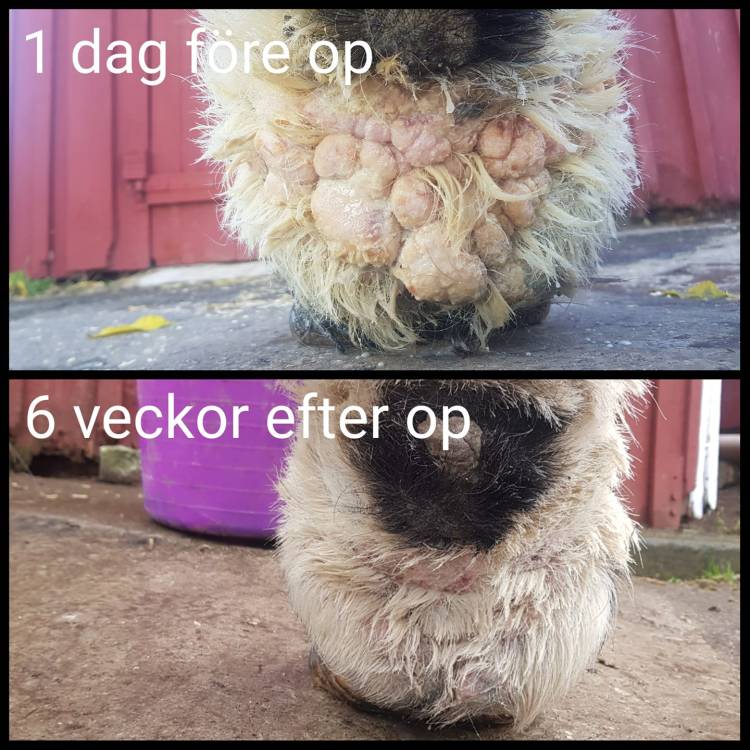
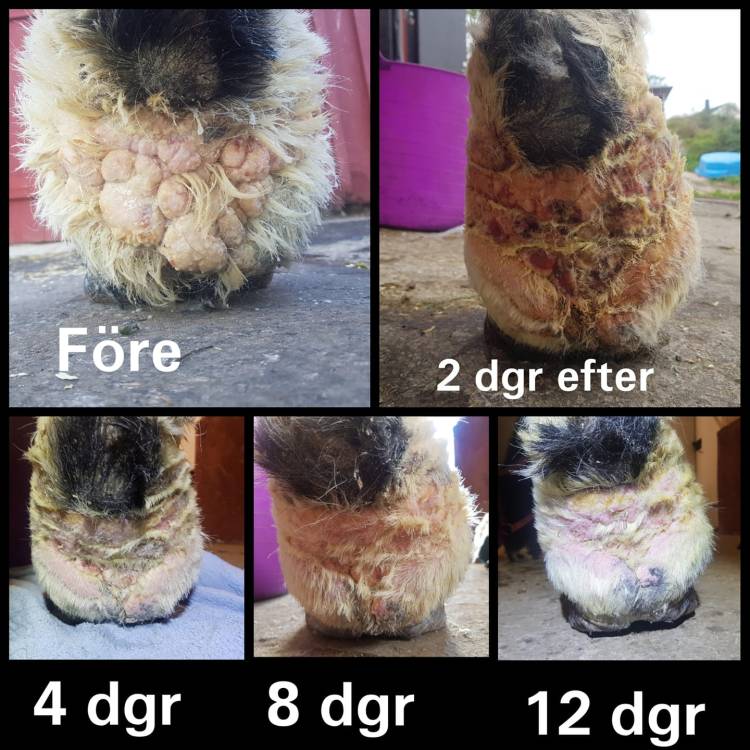
Cryosurgery or electro-cautery seem to be the recommended options for surgical removal, however the outcome is uncertain. Community member Anna Torstensson opted for surgery on her CPPD horse but unfortunately after six months, the nodules began to regrow. It is possible that damage to the skin, as in cutting or freezing, may cause further proliferation.
Summary
It seems that the main influences on the progressive proliferation and inflammation are: –
feather mites
infection/intertrigo
diet
legs allowed to be wet/unhygienic for prolonged periods
So perhaps if we are able to swab and culture any exudate to find the appropriate treatment and use that aggressively, while supporting the gut with a good quality gut supplement (Ron Fields Nutrition is an excellent example) and cleaning up the diet as per recommendations for CPL, while also using appropriate topicals (possibly Anusol, definitely emollient and antifungals/antibacterials)… Also treat correctly for feather mites… Keep the legs clean and as dry as possible… We may see an improvement?
Battles’ summer fly cream is really useful for preventing fly strike in these horses. It is available from most UK equestrian outlets and Amazon.
This is certainly a disease that requires a lot more research.
Studies
Equine pastern dermatitis: a narrative review on clinical presentation, diagnosis, risk factors, prevention, and therapeutic approaches
Vinzenz Gerber, Sarah Kaiser-Thom, Solange Oesch – December 2022
The clinical presentation and surgical treatment of verrucous dermatitis lesions in a draught horse
 Chronic Progressive Lymphoedema